
PRODUCT DETAIL
- Home
- Product Detail
Turmeric
Introduction
The greatest diversity of Curcuma species by number alone is in India, at around 40 to 45 species. Thailand has a comparable 30 to 40 species. Other countries in tropical Asia also have numerous wild species of Curcuma. Recent studies have also shown that the taxonomy of C. longa is problematic, with only the specimens from South India being identifiable as C. longa. The phylogeny, relationships, intraspecific and interspecific variation, and even identity of other species and cultivars in other parts of the world still need to be established and validated. Various species currently utilized and sold as "turmeric" in other parts of Asia have been shown to belong to several physically similar taxa, with overlapping local names.
History
Turmeric has been used in Asia for centuries and is a major part of Ayurveda, Siddha medicine, traditional Chinese medicine, Unani and the animistic rituals of Austronesian people It was first used as a dye, and then later for its supposed properties in folk Medicine.
Uses
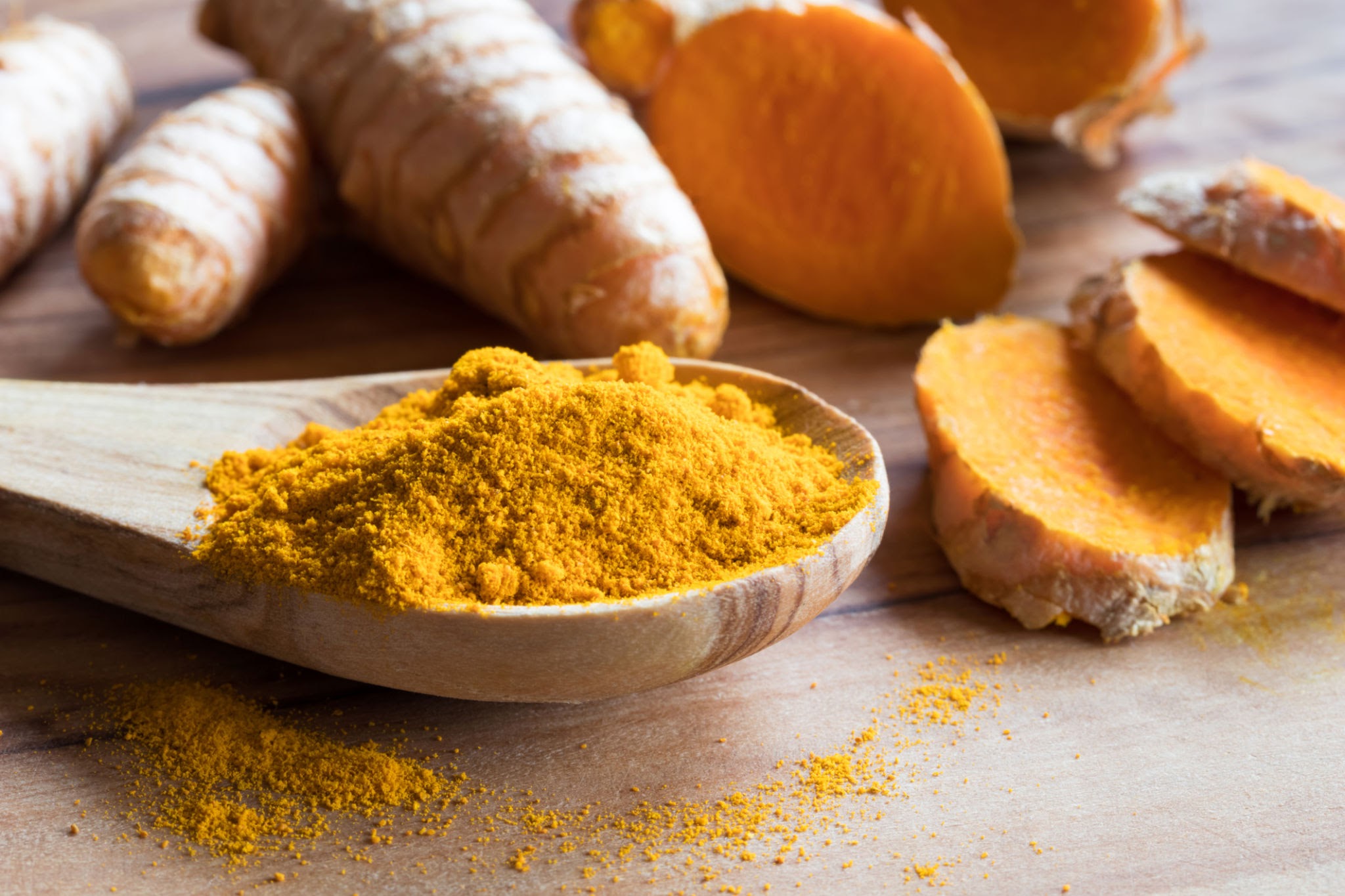
Turmeric is one of the key ingredients in many Asian dishes, imparting a mustard-like, earthy aroma and pungent, slightly bitter flavor to foods. It is used mostly in savory dishes, but also is used in some sweet dishes, such as the Lebanese cake Souf. In India, turmeric leaf is used to prepare special sweet dishes, patoleo, by layering rice flour and Coconut-Jaggery mixture on the leaf, then closing and steaming it in a special utensil (chondrõ). Most turmeric is used in the form of rhizome powder to impart a golden yellow color. It is used in many products such as canned beverages, baked products, dairy products, ice cream, yogurt, yellow cakes, orange juice, biscuits, popcorn, cereals and sauces. It is a principal ingredient in curry powders. Although typically used in its dried, powdered form, turmeric also is used fresh, like ginger.
Turmeric is used widely as a spice in South Asian and Middle Eastern cooking. Various Iranian Khoresh recipes begin with onions caramalized in oil and turmeric. The Moroccan spice mix ras el hanout typically includes turmeric. In South Africa, turmeric is used to give boiled white rice a golden color, known as geelrys (yellow rice) traditionally served with bobotie. In Vietnames cusine, turmeric powder is used to color and enhance the flavors of certain dishes, typically contains fresh turmeric. In Indonesia, turmeric leaves are used for Minang or Padang curry base of Sumatra, such as rendang, sate padang, and many other varieties. Fresh turmeric rhizomes are used widely in many dishes, in particular in the southern Thai cuisine, such as yellow curry and turmeric soup. Turmeric is used in a hot drink called "turmeric Latte" or "golden milk" that is made with milk, frequently coconut milk. The turmeric milk drink known as haldī dūdh (haldī [हलदी] means turmeric in Hindi) is a traditional Indian recipe. Sold in the US and UK, the drink known as "golden milk" uses nondairy milk and sweetener, and sometimes black pepper after the traditional recipe (which may also use ghee).
Turmeric is approved for use as a food color.